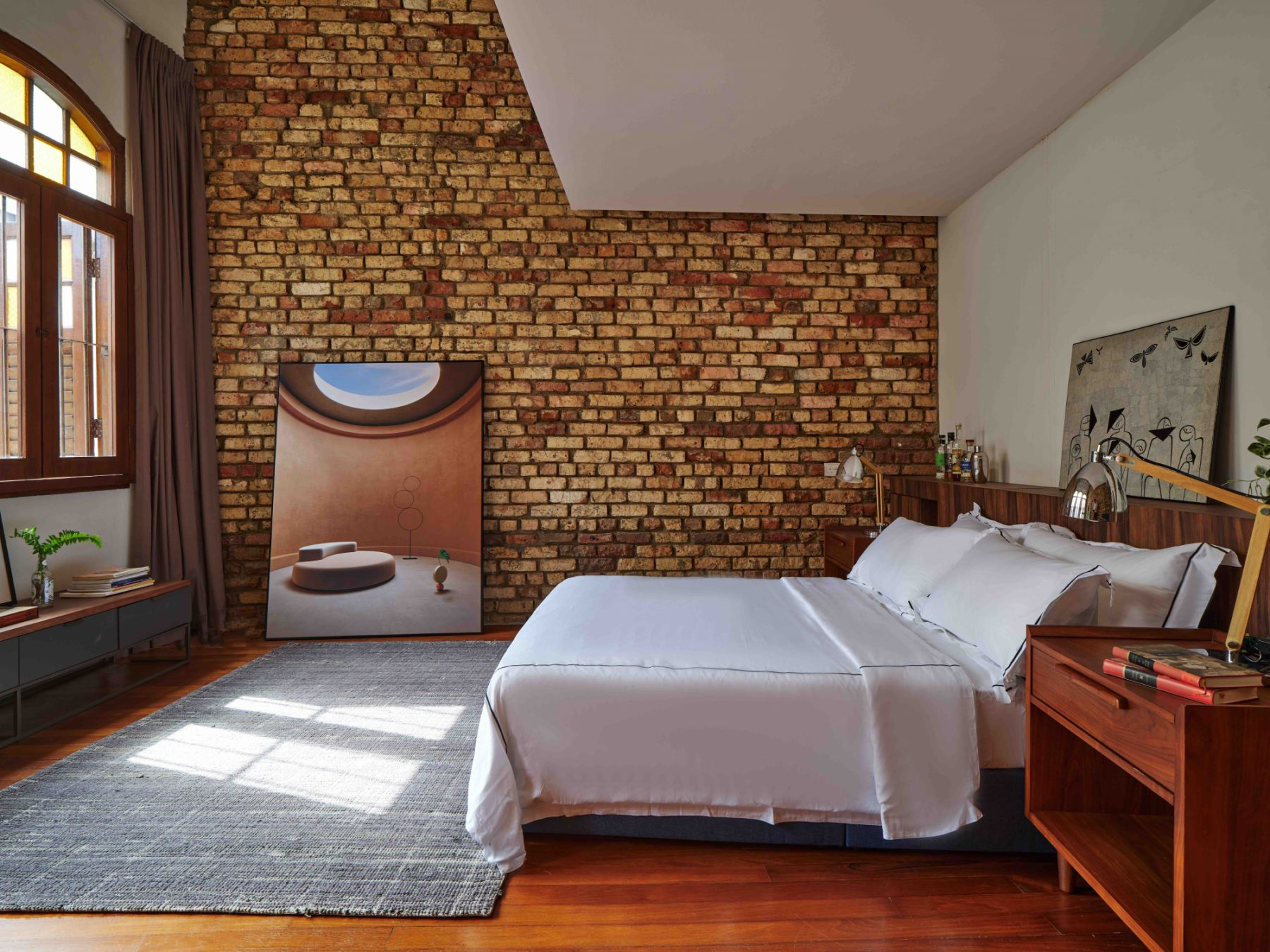


Designing a Bedroom That Actually Helps You Rest
1 June 2026
Singapore
Share

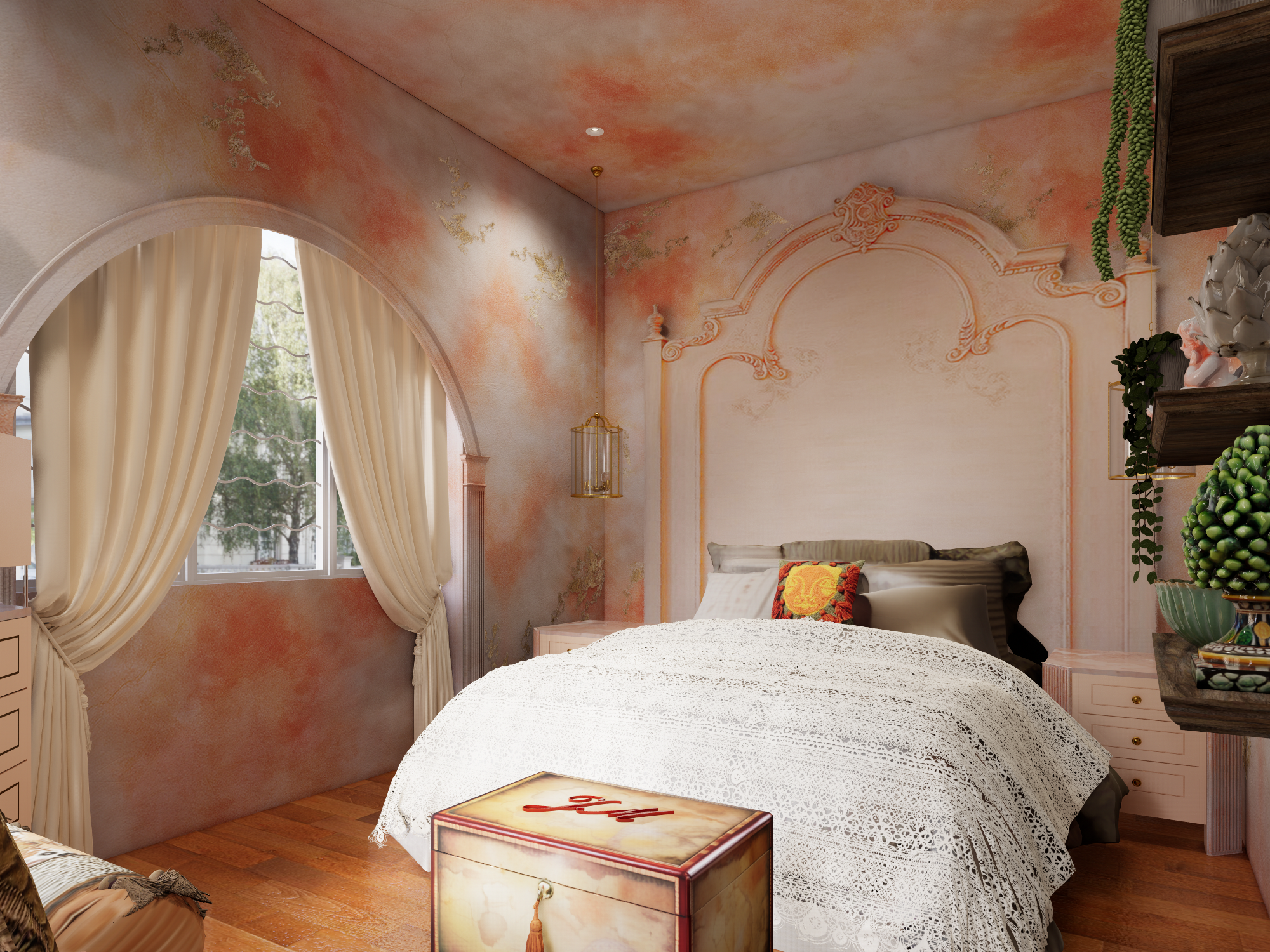
When I started learning about nervous system regulation, I began noticing a gap I had never paid attention to before, even after years of designing bedrooms for other people.
My own bedroom had partial blackout curtains. I had always assumed they were good enough. But once I understood what my body actually needed to switch off at night, the problem became obvious. I sleep better in full darkness. I also sleep better with white noise. Neither of those things had ever made it into a design brief, including my own.
That realisation changed how I approach bedroom design.
Most bedrooms are designed to look restful. Soft neutrals, layered textiles, the right proportions. They can look the part completely—photograph well, pass every design review—while still leaving the person sleeping in them feeling like they never fully go under. The reason is usually not the furniture or the finishes. It is that the space was never designed for how that person's body actually regulates.
The nervous system needs to feel safe before it can rest. That sounds like psychology, and it is. But it has very direct spatial implications, ones that almost never come up in a standard interior design brief.
What nervous system regulation means in a room
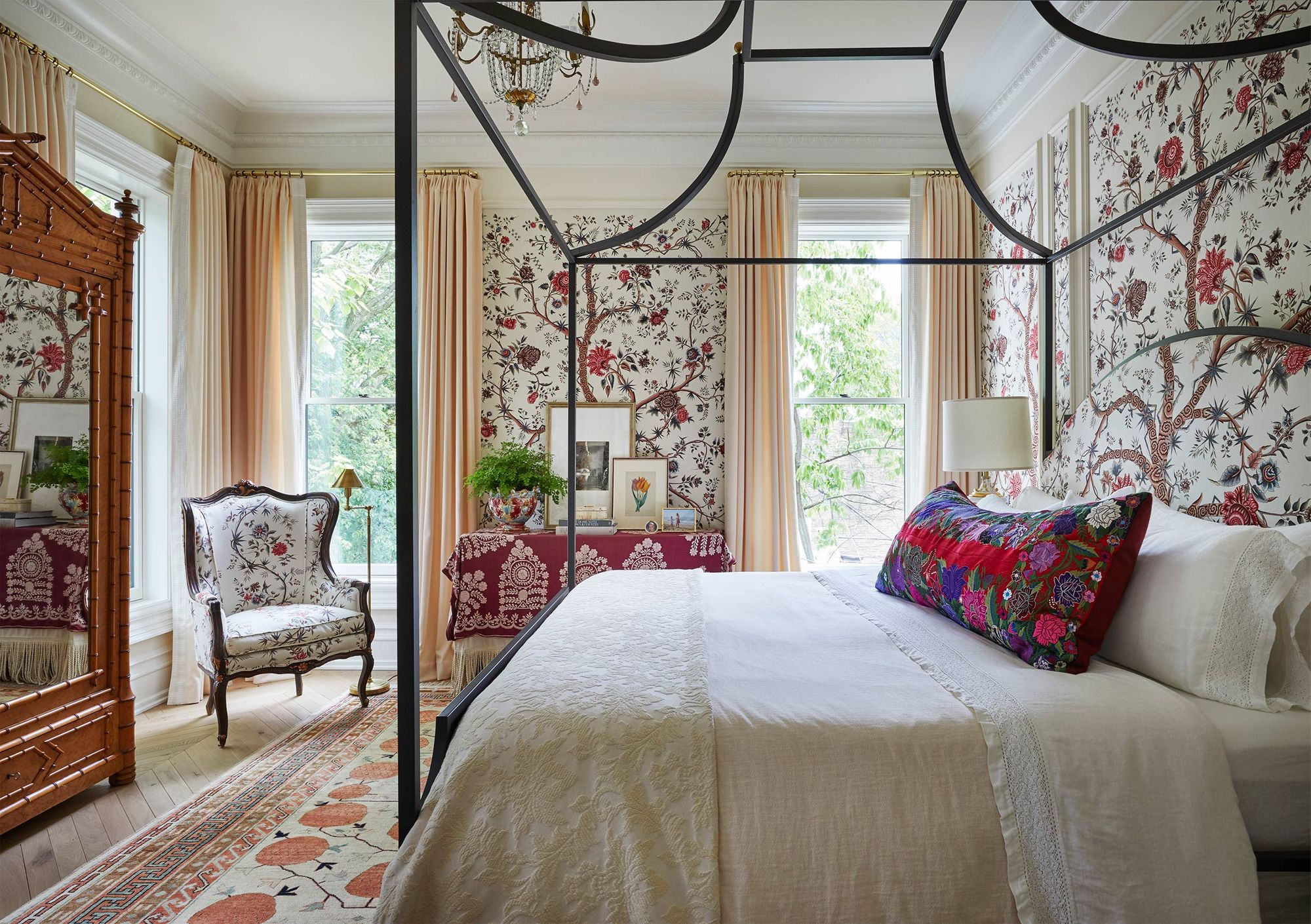
Nervous system regulation is not the same for everyone. Some people need complete darkness. Others need a sliver of natural light to feel oriented. Some sleep better with ambient sound: white noise, a fan, rain. Others need silence. Many people are more sensitive to temperature than they realise: too warm and the body stays alert, too cool and it tenses rather than settles. In Singapore's climate, humidity matters too. Aircon-cooled rooms can become dry enough overnight to disrupt sleep quality even when the temperature feels right.
These are not preferences. They are physiological conditions. And almost none of them show up in a typical brief.
When we ask the right questions at the start of a project, the bedroom design changes in specific ways:
- How do you actually sleep?
- What tends to wake you?
- Do you run warm or cold at night?
- Does noise reach you from outside, the corridor, or another room?
- Do you need full darkness, soft light, white noise, or silence?
The window specification may change. The door may need acoustic treatment. AC placement and the type of unit may change. A ceiling fan versus a split unit is no longer just an aesthetic call.
A bedroom that looks identical to another can perform completely differently depending on whether these questions were asked.
Spatial planning: the decisions that can't be undone
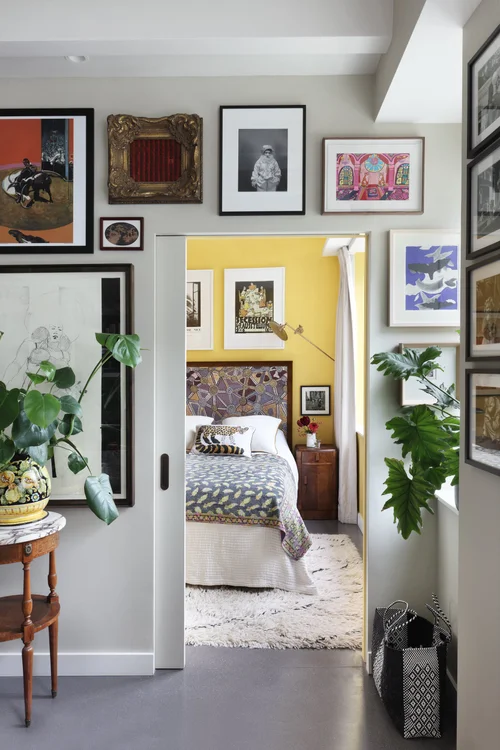
Spatial planning means deciding where everything goes in a room before you buy anything. It is figuring out where the bed should sit, how you walk through the space, and whether the room gives you enough room to move around comfortably. You do this first, before you pick furniture or think about how the room looks.
Once you know the rules for your space, like how far your bed needs to be from the window or where the aircon can go, those rules do not replace the layout work. They sit on top of it. The layout still comes first.
The bed is the most important piece to place. Where it goes decides everything else: how you move around the room, where the morning light lands, whether the aircon blows cold air directly onto you while you sleep, and how much noise from the door reaches you at night. A good starting point is to put the bed against the strongest wall and work outward from there. In a smaller bedroom, leaving about 60cm of space around the bed lets you move without feeling squeezed. In a larger bedroom, 75 to 90cm along the main paths feels more natural.
The rules for your space just add a few more things to think about when you are placing everything. A bed next to a road-facing window might look fine on paper but turn into a light and noise problem at 3am. A wardrobe between the door and the bed can actually help block sound. The direction your bed faces relative to the aircon unit decides whether cold air hits you directly or flows around the room first.
None of these are complicated decisions. But they are early ones. Once the walls are up and the pipes and wiring are in place, changing any of it becomes expensive, or not possible at all.
Sensory environment: light, sound, air
This is where the regulation question does the most work.
Light
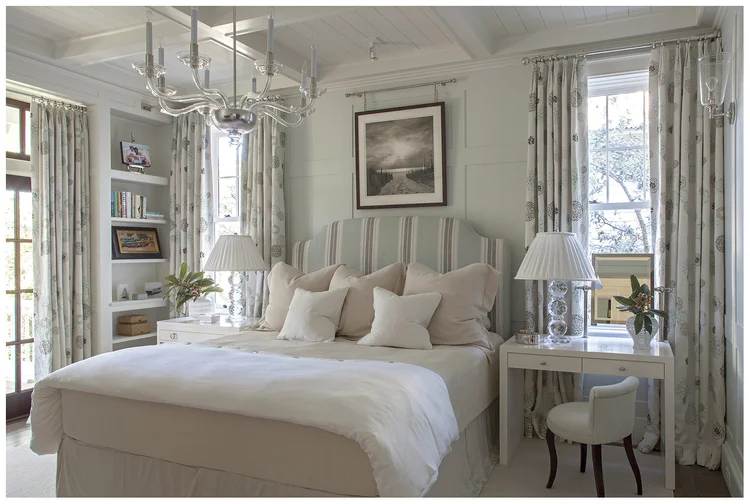
Full blackout is not an aesthetic choice, for many people it is a physiological requirement. Partial blackout curtains are common and better than nothing. But if you are a light-sensitive sleeper, the gap at the curtain track edge, the light seeping through double doors, or the streetlight outside the window may be what wakes you at dawn—not noise, not temperature, just that sliver of light the brief never addressed.
Full blackout requires attention at the curtain track level, not just the fabric. In older apartments and landed homes, the window reveals are not always designed to accommodate a proper blackout installation. This is a renovation-stage decision. It is much harder to solve after the curtains are hung.
Sound

Acoustic performance in a bedroom is almost never discussed unless the client is in a particularly noisy location. It should be part of every brief.
In Singapore, road noise, corridor sound, and HVAC noise from neighbouring units are common. The same problem shows up in Hong Kong, where high-density residential towers mean that sound travels between floors and through shared walls as much as it does through windows. In Tokyo, even well-built apartments in quieter wards sit close to rail lines, and train frequency means the noise pattern is irregular rather than constant, which is harder to sleep through. In New York, street-level noise from traffic, air conditioning units mounted in window frames, and thin pre-war walls make acoustic planning a basic necessity rather than a premium consideration. In London, Victorian and Edwardian conversions were not built with sound separation in mind, and the gap between a ground-floor bedroom and a busy street is often just a single-glazed sash window.
Wherever the city, the principles are the same. A solid-core door with a proper seal performs very differently from a hollow-core door. Acoustic laminated glass on road-facing windows can change sleep quality for light sleepers more than any other single intervention. Area rugs and upholstered surfaces reduce internal echo too, a hard-surfaced room amplifies small sounds: the AC cycling, rain on the window, a door closing down the hall.
White noise works because it masks irregular sounds rather than eliminating them. If it is part of how you regulate, the room can be designed to support it or at least not fight it.
Temperature and humidity
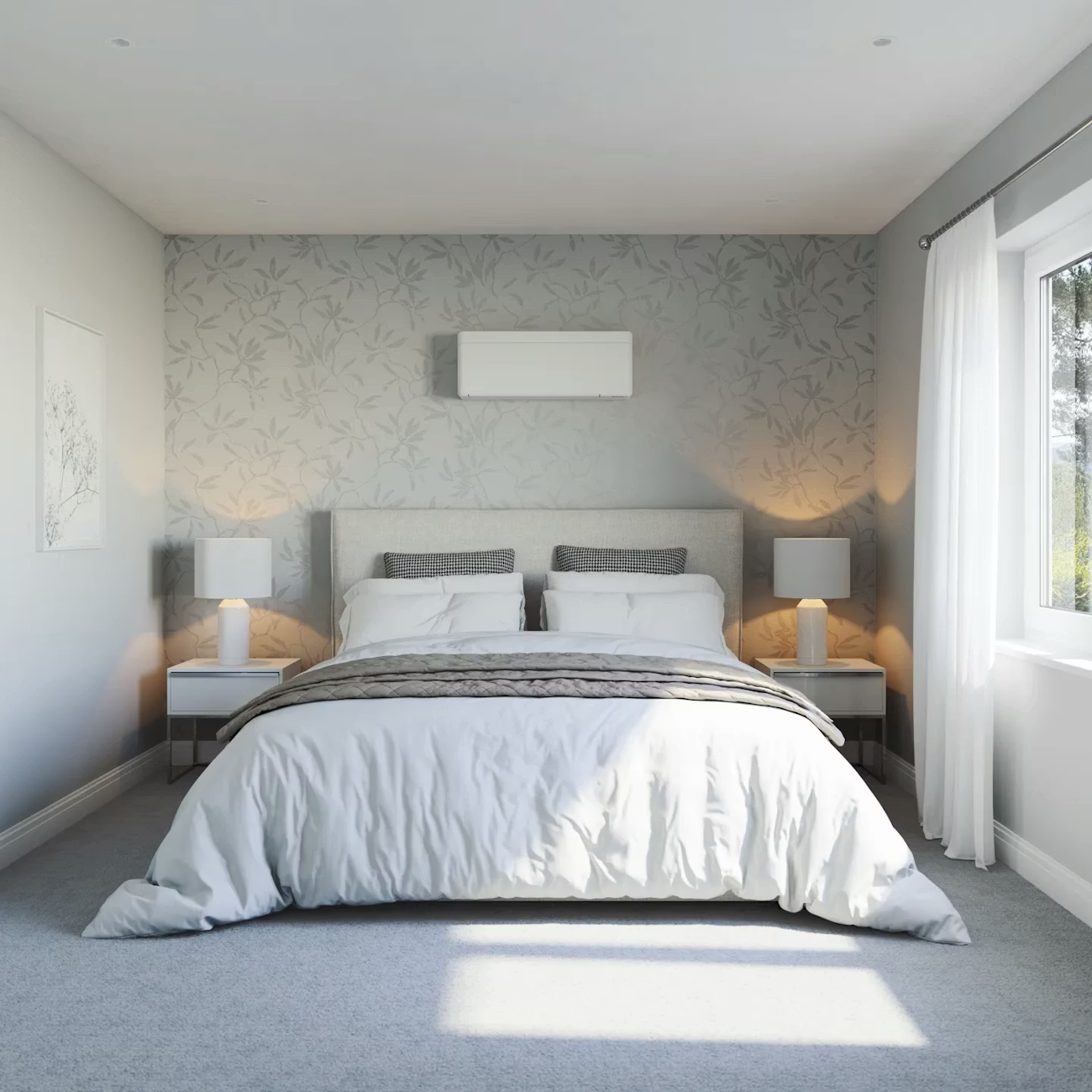
The body's core temperature drops during sleep onset. A room that stays too warm prevents this. A room that is too cold creates tension rather than rest. Individual tolerance varies, but for most people the range is narrower than they expect.
In Singapore, aircon-cooled bedrooms can become dry overnight. Low humidity affects the airways and can contribute to poor sleep quality even when the temperature feels correct. These two factors; temperature and humidity, are worth addressing together, not as separate afterthoughts. AC placement matters too. Airflow that hits the body directly, particularly at the head or chest, is a common sleep complaint that is almost always a placement decision that was never made with sleep in mind.
Visual order: what the eye reads at the end of the day
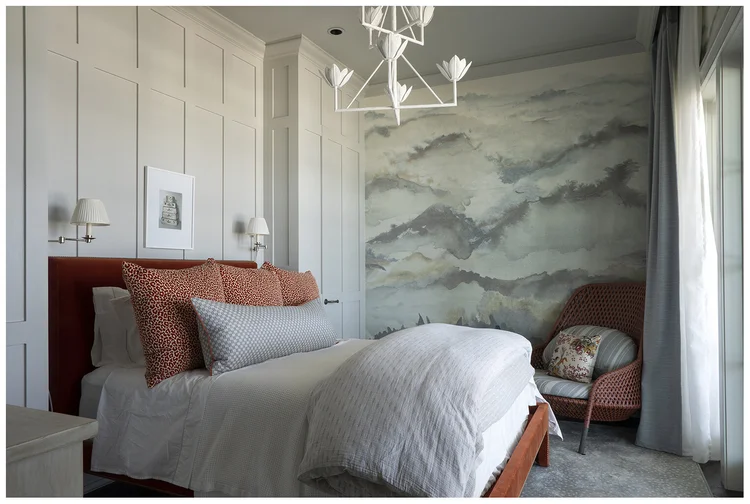
Once the spatial and sensory conditions are addressed, the visual environment matters because the eye feeds the nervous system too.
A bedroom carrying visual noise, surfaces crowded with objects, storage that is present but unplanned, competing focal points keeps the brain lightly alert. The eye scans for resolution and does not find it. This does not feel dramatic, but it compounds everything else.
Clear visual hierarchy gives the room a primary focus (the bed), supporting elements that serve it (bedside tables, lighting), and background elements that recede (walls, curtains, floors). Storage embedded into the architecture rather than placed in front of it keeps everyday objects accessible without dominating the room.
The goal is a room where, when you walk in at the end of the day, nothing is asking for your attention. That does not require emptiness. It requires planning.
Lighting layers into this too. Most bedrooms rely on a single ceiling light. Uniform brightness that floods the room when the body is already trying to slow down. A warmer, lower source used during the wind-down period is one of the more practical changes a bedroom can make, and one of the cheapest relative to its effect.
What this looks like in practice
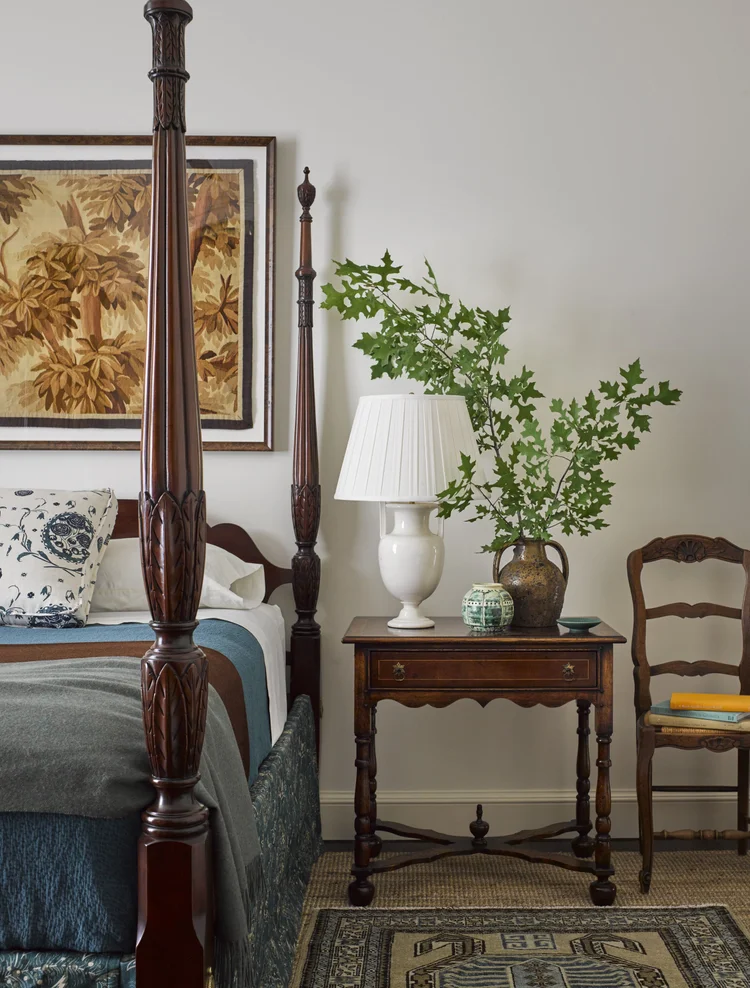
A bedroom brief that accounts for nervous system regulation asks different questions from the start. It treats blackout performance, acoustic quality, temperature control, and airflow as design decisions not product choices made after the renovation finishes.
The answers are different for everyone. That is exactly the point. A room designed for someone who sleeps in full darkness with white noise at 20°C looks, on the surface, like the same neutral well-finished bedroom as one designed for someone who prefers ambient light and silence. The difference is in the specification and whether it was decided deliberately or left to chance.
At Loren Ng Designs, the regulation questions go into the brief at the same time as layout and materials. We design bedrooms as part of the whole-home brief, because the decisions made in this room — how sound travels, how air moves, how light is controlled — connect to the structure of the home itself.
If you are planning a bedroom renovation and want to understand what a structured design process involves, the next step is a conversation.
📩 ask@lorenngdesigns.com
📷 @loren_ng_designs
Posted by:


BACK TO BLOG
You Might Also Like
.png)