





Why your bedroom still feels wrong
15 June 2026
Singapore
Share

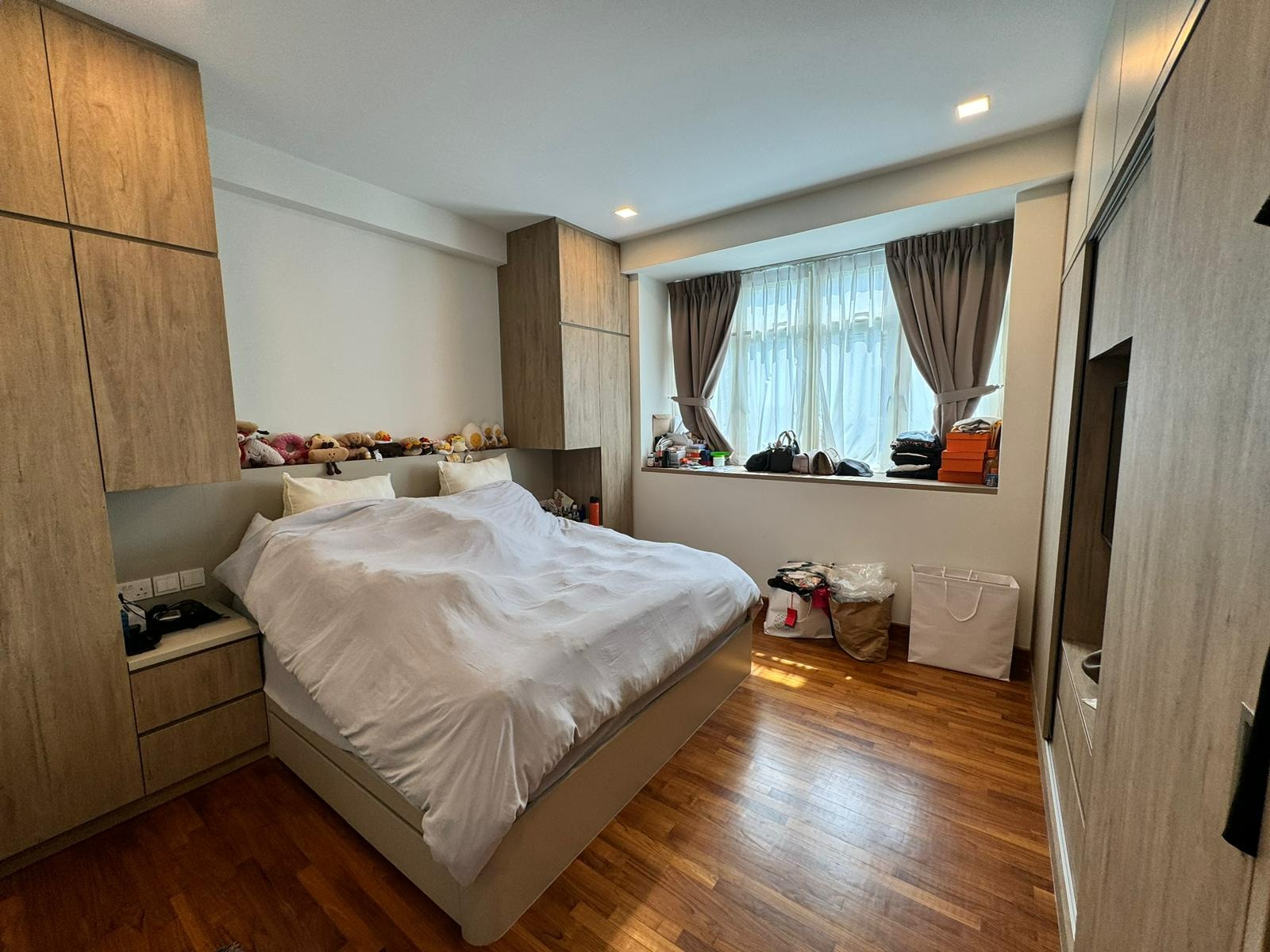
A client came to me wanting styling only. She was clear about it. She knew what she liked and just needed someone to pull it together.
Within the first fifteen minutes of the conversation, the real problem surfaced.
Her bedroom was directly visible from the stairwell. Anyone walking up or down had a clear sightline into her most private space. The wall where her bed sat was too short, making the bed feel wedged in rather than anchored. The floor was cold homogeneous tile, and she was someone who felt the difference between surfaces — who wanted warmth underfoot, texture you could actually feel. An oddly positioned window sat without any proper covering, leaving the room with no sense of enclosure. And still, she had framed the whole thing as a styling problem.
She was not wrong to want improvement. She was wrong about where the problem started.
The sequence most people get backwards
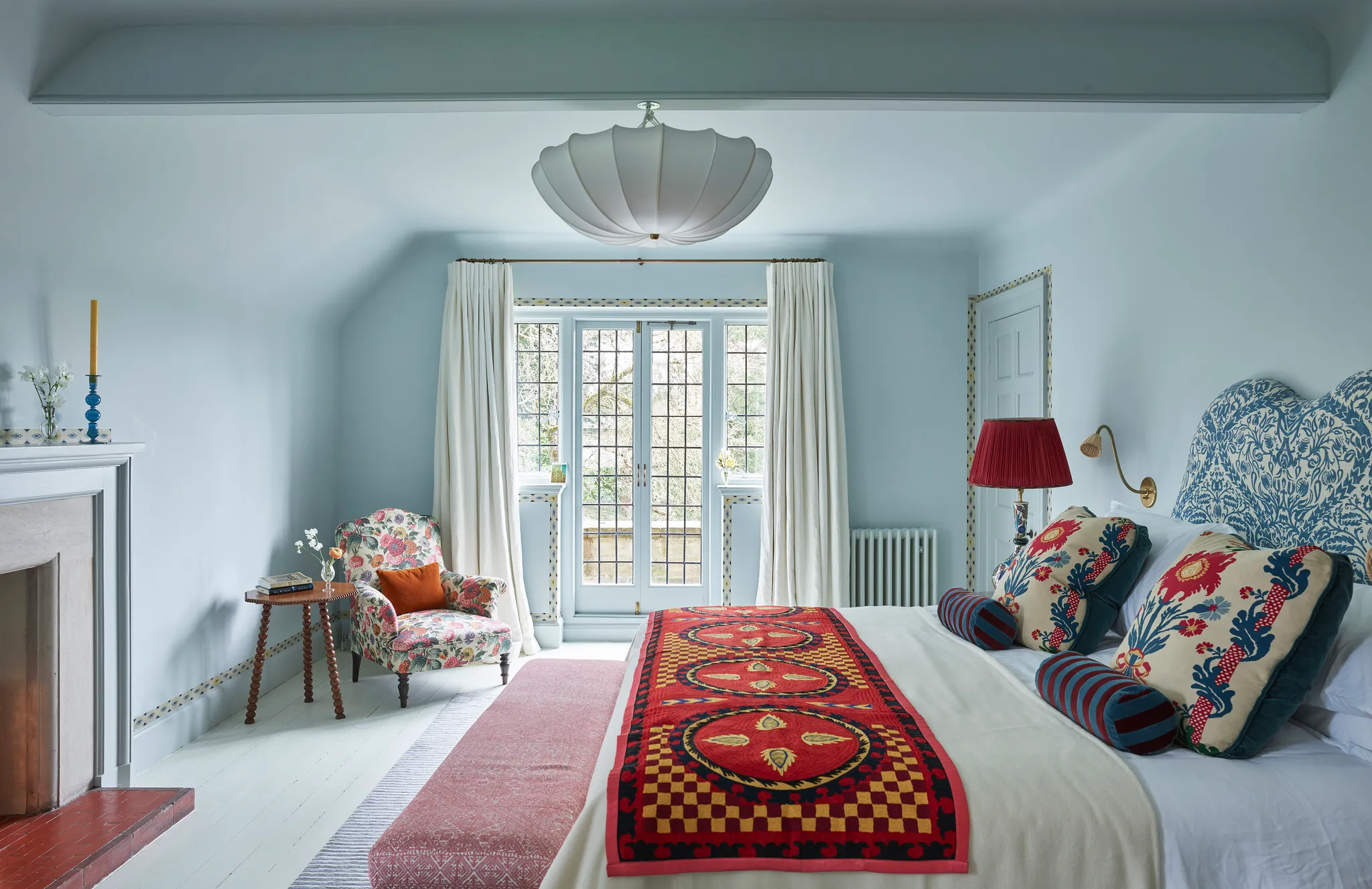
When a bedroom doesn't feel right, the instinct is usually to shop. New bedlinen. Better artwork. A different lamp. Sometimes a rug. These purchases can improve the surface appearance, and occasionally that genuinely helps. But most of the time, the discomfort persists because the real problem is spatial, not decorative.
The layout of the bedroom determines whether you feel exposed or protected the moment you step inside. The position of the bed relative to the entrance, the sightlines from outside the room, and the relationship between where you sleep and what you can see from that position all communicate something to the nervous system before you consciously register it. Styling cannot resolve that. No amount of cushion arrangement changes the fact that your bed is the first thing someone sees when they walk up the stairs.
A bedroom that restores you is not primarily a decorating result. It is a spatial one. The floor plan has to be resolved first: how you enter, where your eye lands, how far you can move without the walls pressing in, and what degree of enclosure the room offers. Furniture placement follows. Materials and finishes follow. Decorative styling comes last.
When the order is reversed, the result is a room that photographs reasonably well but never quite settles into rest.
Privacy is a spatial condition, not a preference
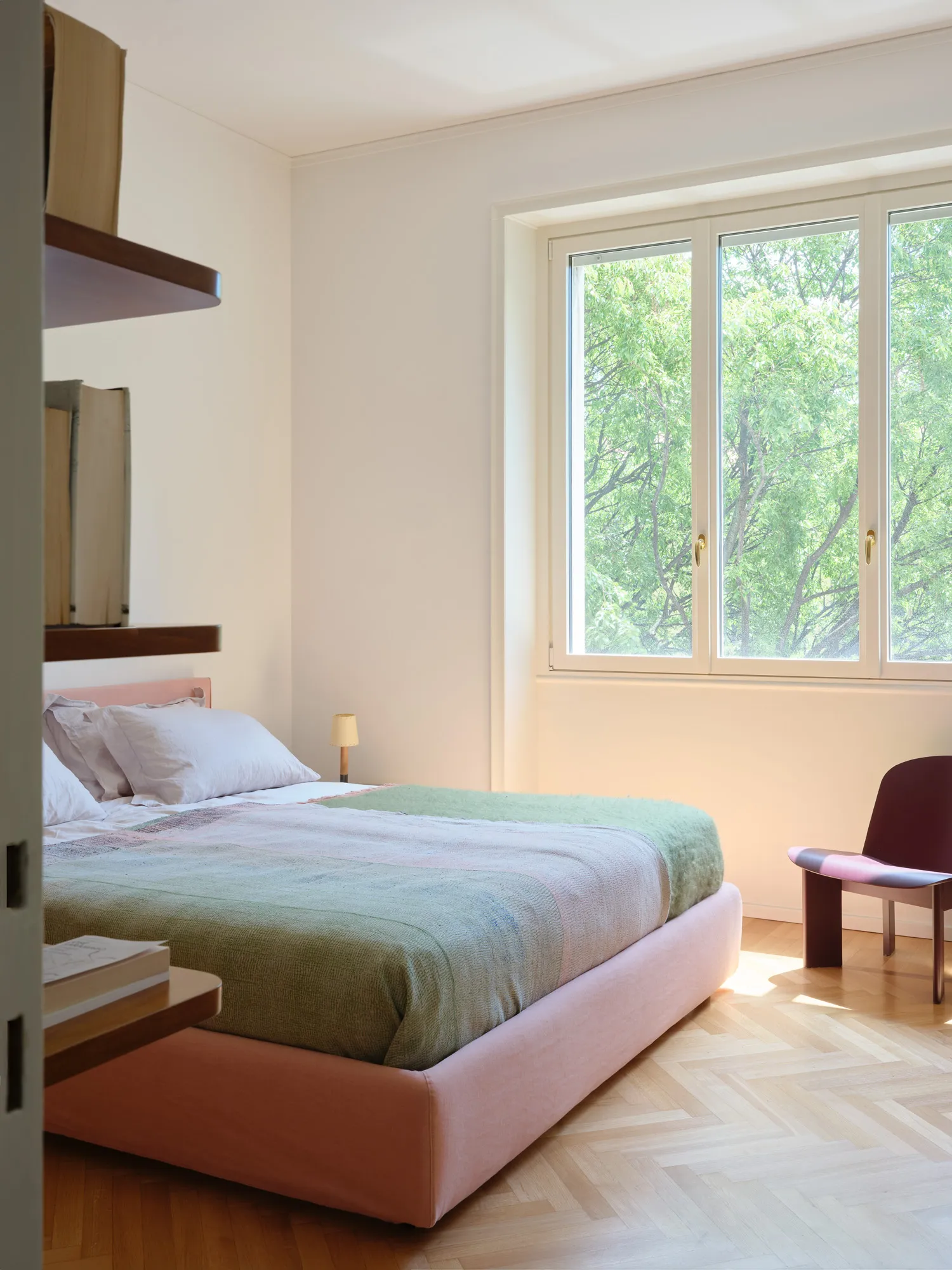
The word "privacy" in bedroom design is often treated as something soft, something you feel rather than something you plan for. In practice, it is a specific spatial problem with specific spatial solutions.
If your bedroom has direct sightlines from a corridor, a stairwell, or an adjacent window, the room cannot fully relax. The brain registers exposure even when you are not consciously thinking about it. You may find yourself pulling the door closed more often than you should have to. You may feel slightly unsettled without being able to name it. You may describe the room as not quite working and conclude that the problem is the furniture.
The fix is almost never the furniture. It starts with understanding the orientation of the entrance, the visual hierarchy when you cross the threshold, and whether the position of the bed places you in view or places you in command. A bed set with its back to a solid wall, away from direct sightlines, sits differently in the body than the same bed placed where it is the first thing anyone sees. The materials and styling can be identical. The experience is not.
Window treatment is part of this, and not just as a light-control decision. An uncovered or poorly covered window creates a gap in the room's sense of enclosure that the brain reads as exposure even when the street below is empty. The right window covering has to solve the sightline problem first. How it looks comes second.
Proportion, and why the bed wall matters more than the bed
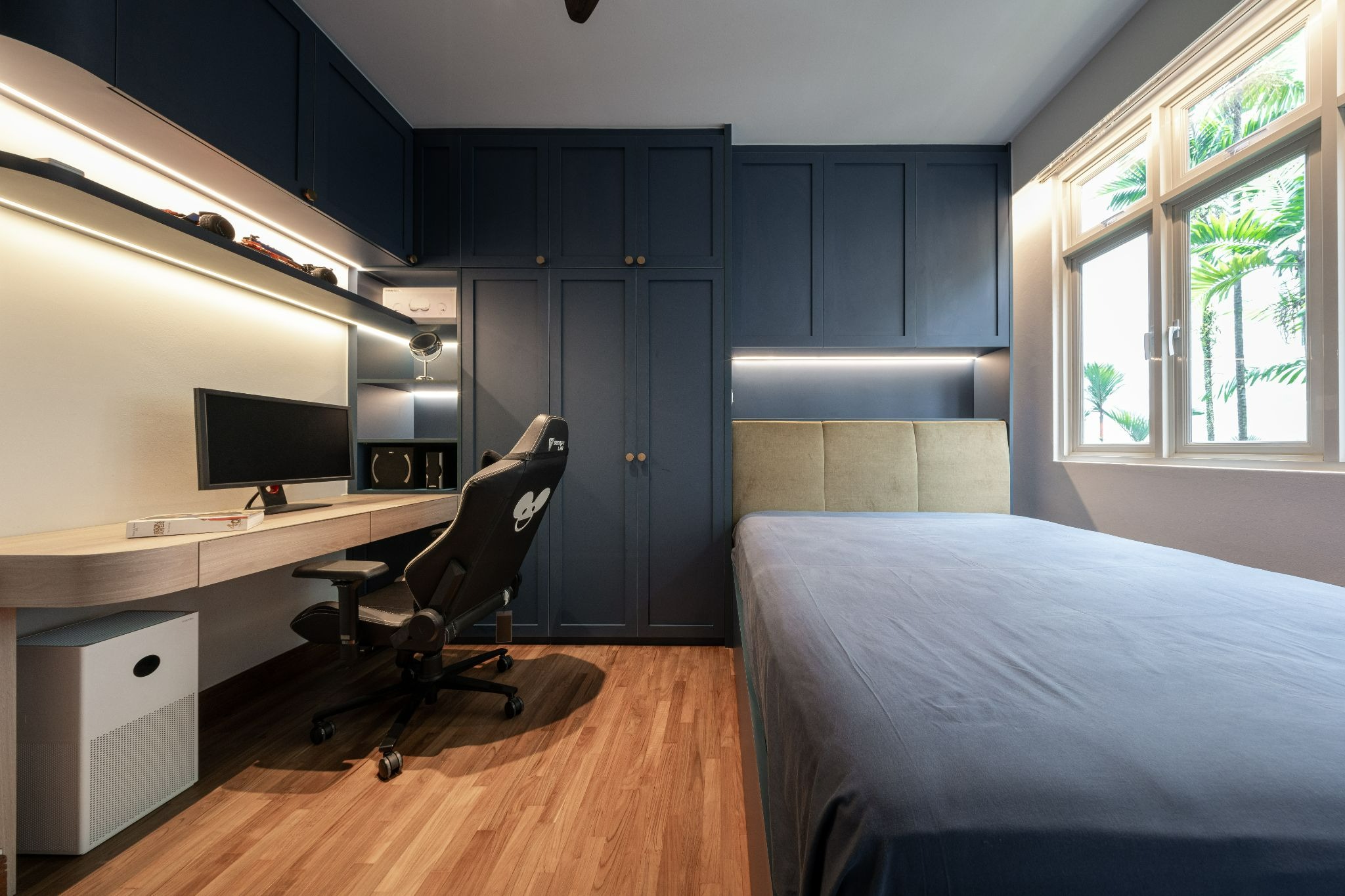
A bed that looks right in a showroom will not automatically look right in a room where the wall behind it is too short or too narrow. The visual relationship between the bed and the wall it sits against is one of the most influential spatial judgments in bedroom design, and one of the least discussed.
A short bed wall makes the largest piece of furniture in the room look like an afterthought. The bed appears to have been placed because there was nowhere else to put it, not because the space was designed around it. This affects how the room reads and, more practically, how it feels when you are lying in it. Cramped visual proportions behind the bed create a kind of ambient pressure that headboard choices and bedding cannot counteract.
The right question to resolve before choosing the bed frame, the headboard height, or the bedside layout is whether the wall can actually hold the bed. Sometimes this means reconsidering the bed's position in the room entirely, even if that requires rethinking the door swing, the wardrobe placement, or how the dressing area and sleeping area relate to each other.
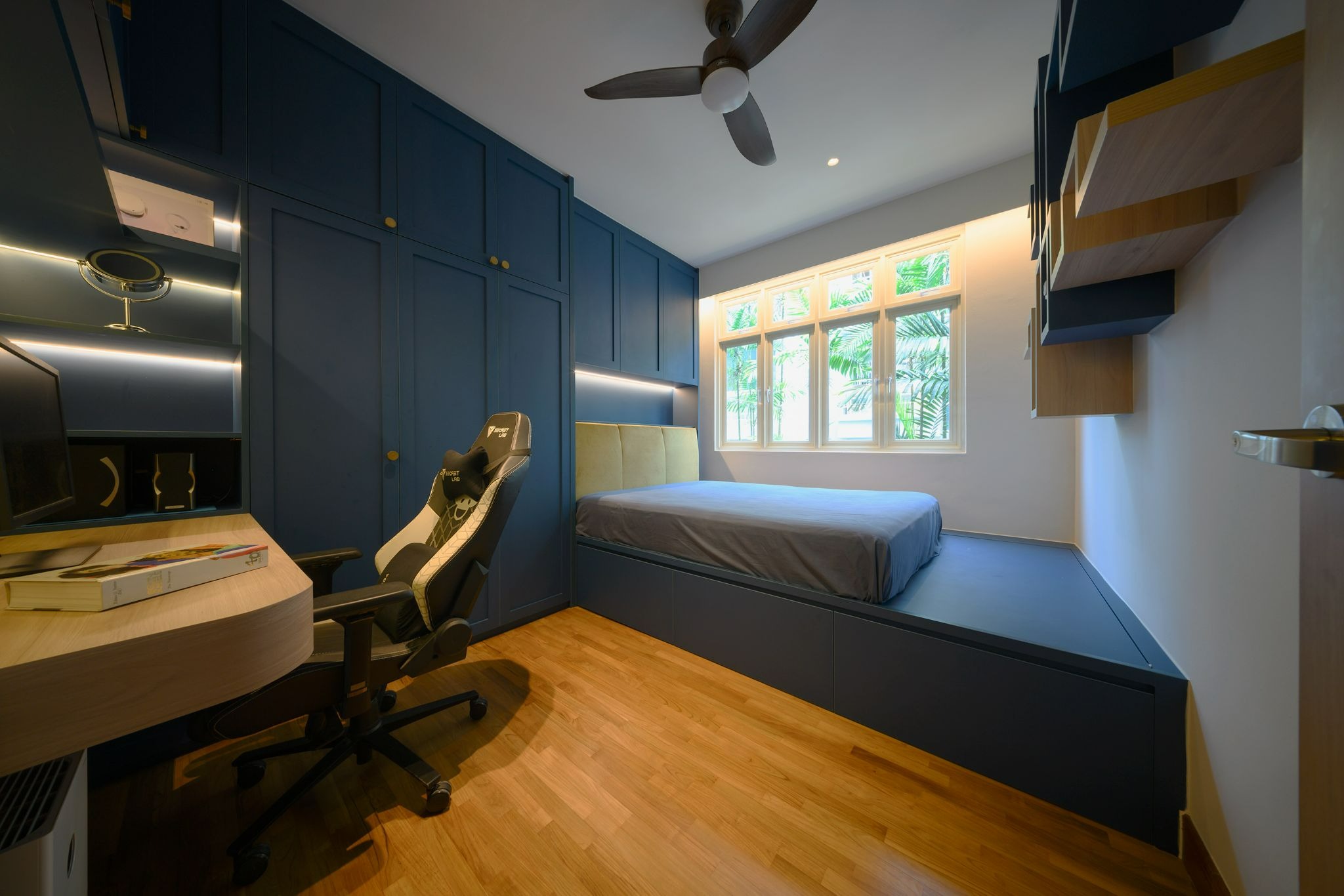
Storage feeds into this too. A bedroom where objects sit visibly because there is nowhere logical to put them reads as unresolved regardless of what else has been done. Integrated storage — wardrobes, bedside cabinetry, concealed compartments — removes the visual noise that makes a room feel smaller and less settled than it actually is. The goal of good bedroom storage is not organisation for its own sake. It is visual quietness, the condition where the room's proportions become readable again because the room is not competing with its own clutter.
This connects to another piece we wrote on: Designing a Bedroom That Actually Helps You Rest
Sensory comfort as a design decision
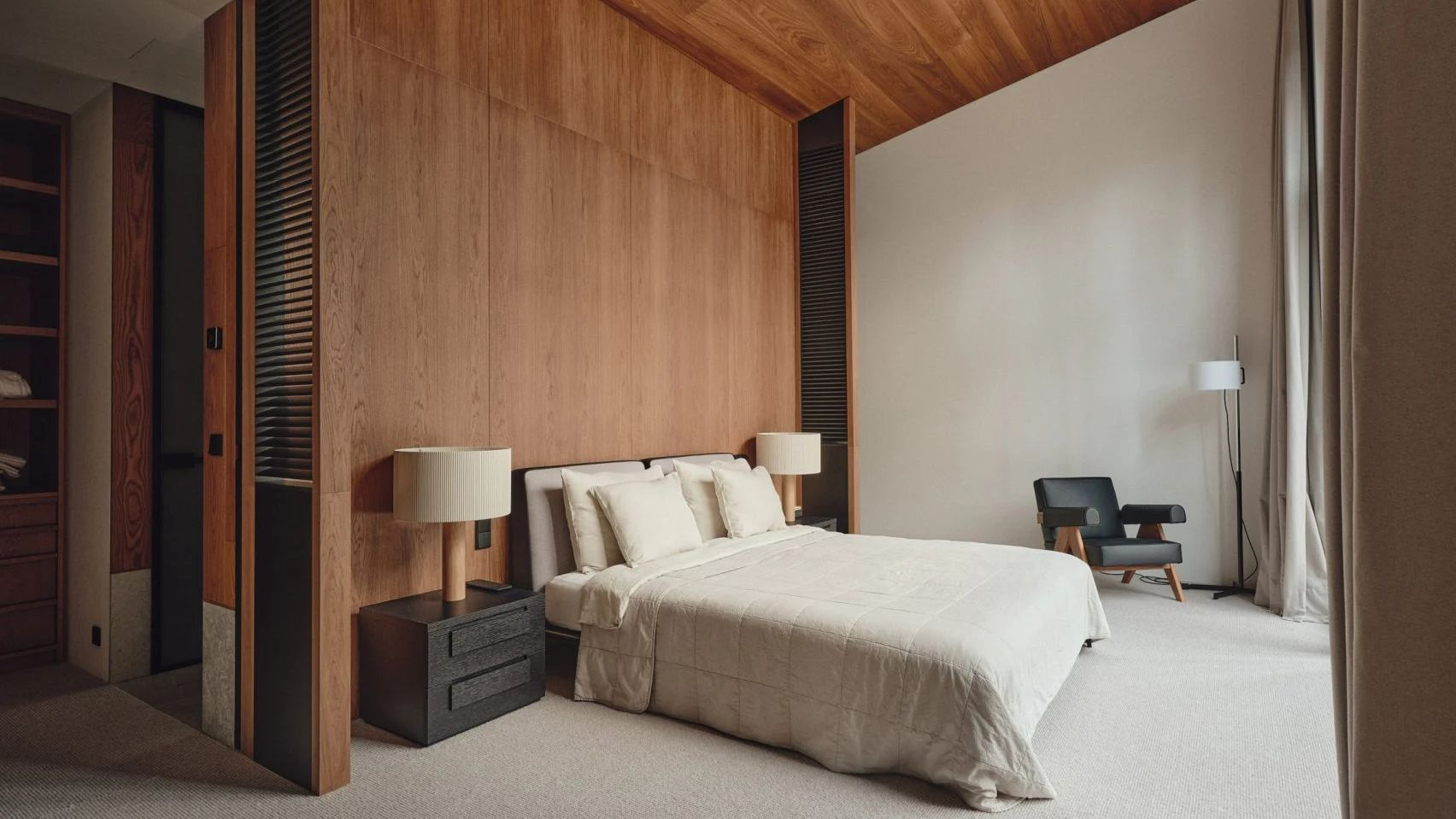
My client with the cold tile floor was not being precious. She was identifying a real mismatch between the surface she was living on and the way she experienced her own home.
Sensory comfort in a bedroom is a material decision that determines how the space performs for the specific person using it. Cold, hard flooring underfoot when you wake creates a small physical interruption to the transition from sleep to alertness. It is not dramatic. It does not register as a design problem in the moment. But it accumulates, and it shapes how the room feels not because the tile is ugly, but because it is the wrong material for how this person lives.
For her, the floor needed warmth and texture underfoot. The right answer was timber, or a large wool and silk rug over a surface that needed to be softer than what was there. That choice was not a styling preference. It was a response to how she actually moved through the room and what her body needed from the space.
Lighting behaves the same way. Overhead lighting at full brightness is not a problem you solve by dimming it. The position of light sources, the colour temperature of the bulbs, and the relationship between task lighting and ambient lighting together determine whether the room can make the shift from day to evening that the body needs in order to wind down. Warm light at a lower angle signals rest. Harsh overhead light does the opposite. That is a physiological response, not an aesthetic one, and it has to be planned before the electricals are signed off — not corrected after the fact with a new lamp.
What "styling only" usually costs
A bedroom that is styled without being spatially resolved will continue to feel off. The styling may improve it temporarily. But the underlying problems — the sightlines, the proportions, the material mismatches, the storage gaps, the light behaviour — will persist and work against everything placed on top of them.
What that usually means in practice is two rounds of expenditure: the first to style the room, and the second to redo the work when the room still doesn't feel right. That is a more expensive way to arrive at a result that proper sequencing would have produced the first time.
The bedroom my client came to me for did not need a different lamp. It needed a spatial review first. The styling that followed was informed by what the space actually required: a bed position that protected her from sightlines, a wall that could hold the bed properly, flooring that matched how she experienced warmth and texture, and window coverage that gave the room a sense of enclosure. The budget she had in mind remained the same. The starting point was different, and so was the outcome.
If your bedroom is not restoring you the way it should, the question is not what to add to it. The question is whether the space was planned before it was styled. That is where we start.
If your bedroom still feels off and you are not sure why, that conversation is worth having before you buy anything else.
📩 ask@lorenngdesigns.com
📷 @loren_ng_designs
Posted by:


BACK TO BLOG
You Might Also Like
.png)
.jpeg)


