





Why Some Home Offices Make It Harder to Focus
20 July 2026
Singapore
Share


Working from home has changed how many people use their homes in Singapore. Dining tables became workstations. Spare bedrooms became offices. Quiet corners became meeting rooms.
Yet many homeowners still struggle to focus comfortably at home, even after renovation.
The problem is often not productivity itself. It is the environment surrounding it.
A home office can look beautiful and still feel mentally exhausting to use every day. Poor lighting, visual clutter, weak storage planning, echo-heavy materials, and bad desk positioning all affect how well you think and work over time.
Good home office design is not about fitting a desk into a room. It is about creating a space that supports focus without making your home feel like a corporate office.
Desk Positioning Affects Focus More Than Most People Realise
One of the most overlooked parts of home office design is desk placement.
Many homeowners position desks based only on available wall space or power points. However, what you face while working affects your concentration, stress levels, and visual comfort throughout the day.
For example, placing a desk directly facing a bed can make it harder for your brain to separate work from rest. Positioning your workstation along a high-traffic circulation path can also create constant subconscious interruption, even when the room itself looks organised.
Natural light matters too. Good daylight improves visual comfort and reduces eye strain, but direct glare on screens quickly becomes uncomfortable during long working hours.
At LND, we often study sightlines carefully during space planning. What you see from your desk every day affects how calm or distracting the environment feels over time. In some cases, simply rotating the workstation or introducing partial screening can significantly improve focus without increasing room size.
Visual Clutter Creates Mental Fatigue

Many home offices now double as storage spaces, study areas, or guest rooms. Without proper planning, this creates constant visual noise.
Open shelving is one common example. While it can look attractive initially, overexposed storage often becomes mentally tiring during daily use. Wires, documents, chargers, equipment, and miscellaneous items slowly accumulate within sight.
Your brain continues processing visual information even when you are not consciously paying attention to it. Over time, excessive visual stimulation can make a workspace feel restless and difficult to focus in.
This is why concealed storage matters in multifunctional homes. Built-in cabinetry, integrated cable management, concealed charging zones, and hidden printer storage help reduce visual clutter while keeping work essentials accessible.
The goal is not minimalism for appearance. The goal is reducing unnecessary mental load during everyday use.
This is also where bespoke carpentry becomes valuable. Off-the-shelf furniture rarely solves highly specific workflow needs well, especially in compact Singapore homes where every centimetre matters.
Lighting Changes How a Workspace Feels
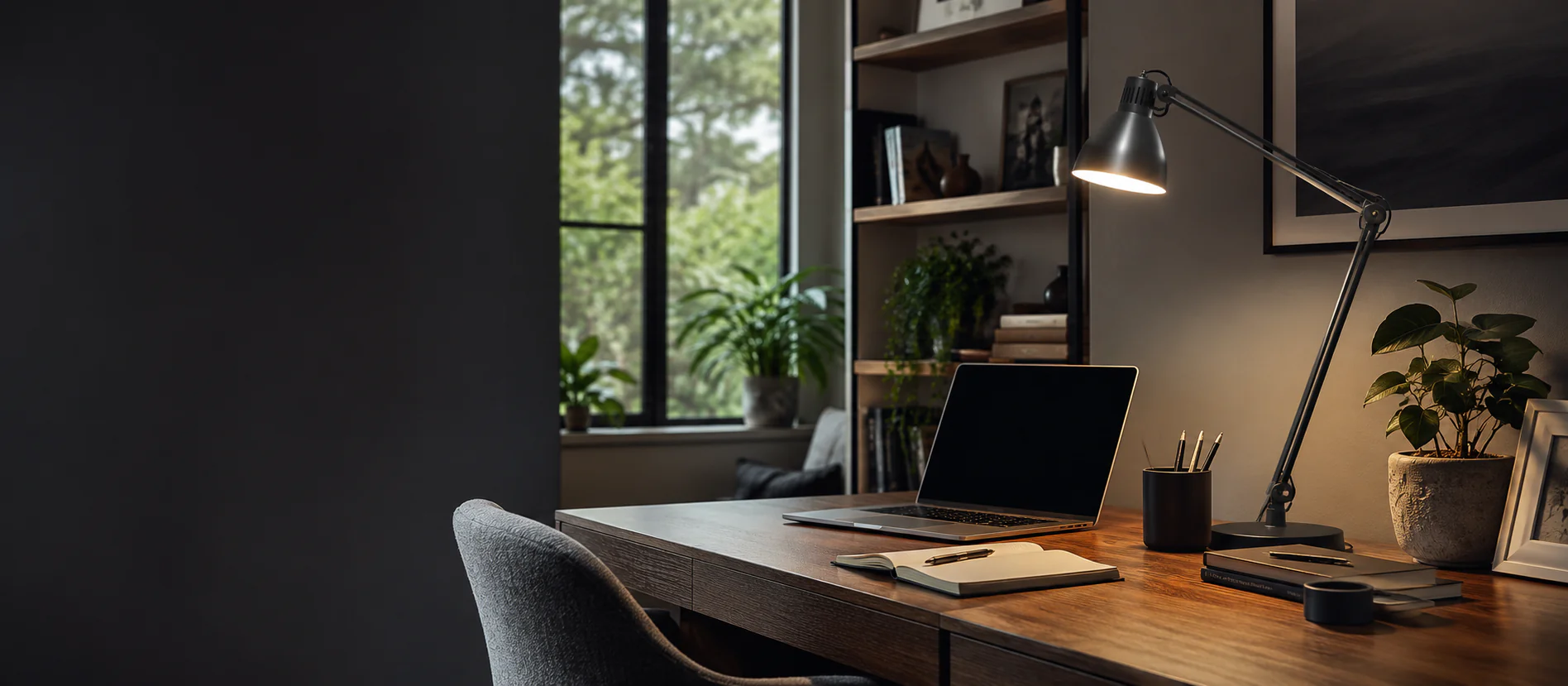
Lighting is often treated as decoration, but it directly affects concentration, energy levels, and visual fatigue.
Many home offices rely heavily on a single ceiling light, which creates flat illumination and eye strain over time. Others prioritise aesthetics without considering how the lighting performs during long working hours.
Good home office lighting usually requires layers. Ambient lighting provides overall brightness. Task lighting supports focused work. Softer accent lighting helps reduce harshness during evening hours.
Colour temperature matters as well. Cooler lighting generally supports alertness during the day, while warmer lighting helps the brain transition into rest mode later in the evening.
This becomes especially important in multifunctional spaces where one room needs to support work during the day and relaxation at night.
At LND, we often plan lighting around behavioural patterns instead of treating it as a final decorative decision. The same room may need to support work calls in the afternoon and recovery in the evening. Flexible lighting helps the space adapt accordingly.
Acoustic Comfort Is Often Ignored During Renovation
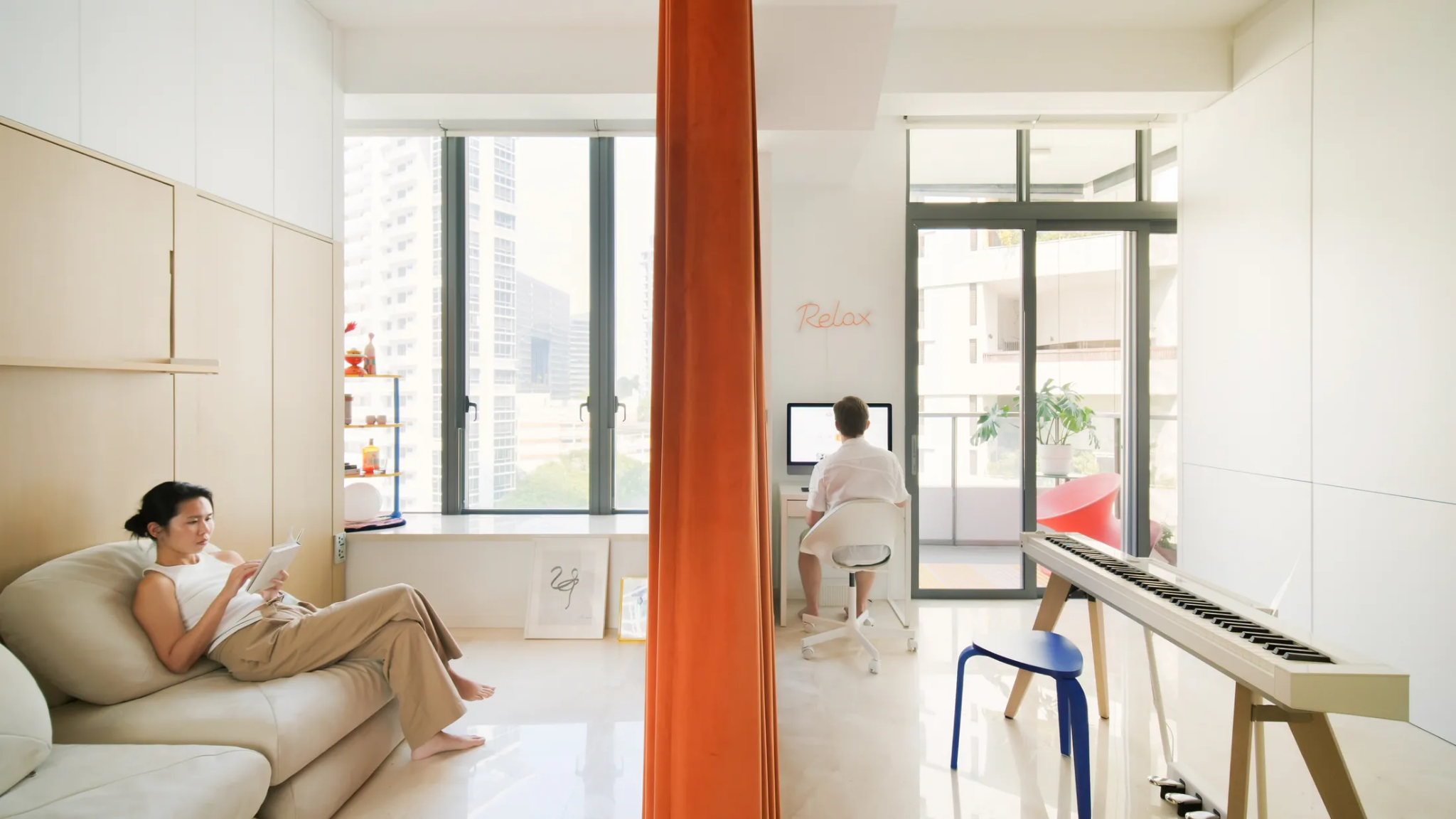
Acoustic comfort is one of the least discussed parts of residential renovation, yet it strongly affects how a workspace feels.
Hard surfaces such as glass, stone, and large-format tiles reflect sound easily. In open-plan homes, this often creates echo-heavy environments where conversations, meetings, and household activity travel across the house.
Many homeowners only realise the problem after moving in.
Poor acoustics affect concentration, privacy, and even stress levels during long periods of work. This becomes more noticeable when multiple family members work or study at home simultaneously.
Good acoustic planning does not always require major construction work. Softer materials such as curtains, rugs, upholstered furniture, and textured finishes can help absorb sound reflections. Built-in carpentry and partitions can also help buffer noise between spaces.
Layout planning matters too. Positioning workspaces away from televisions, kitchens, or major circulation paths can significantly improve daily comfort.
A Good Home Office Should Support Both Work and Recovery
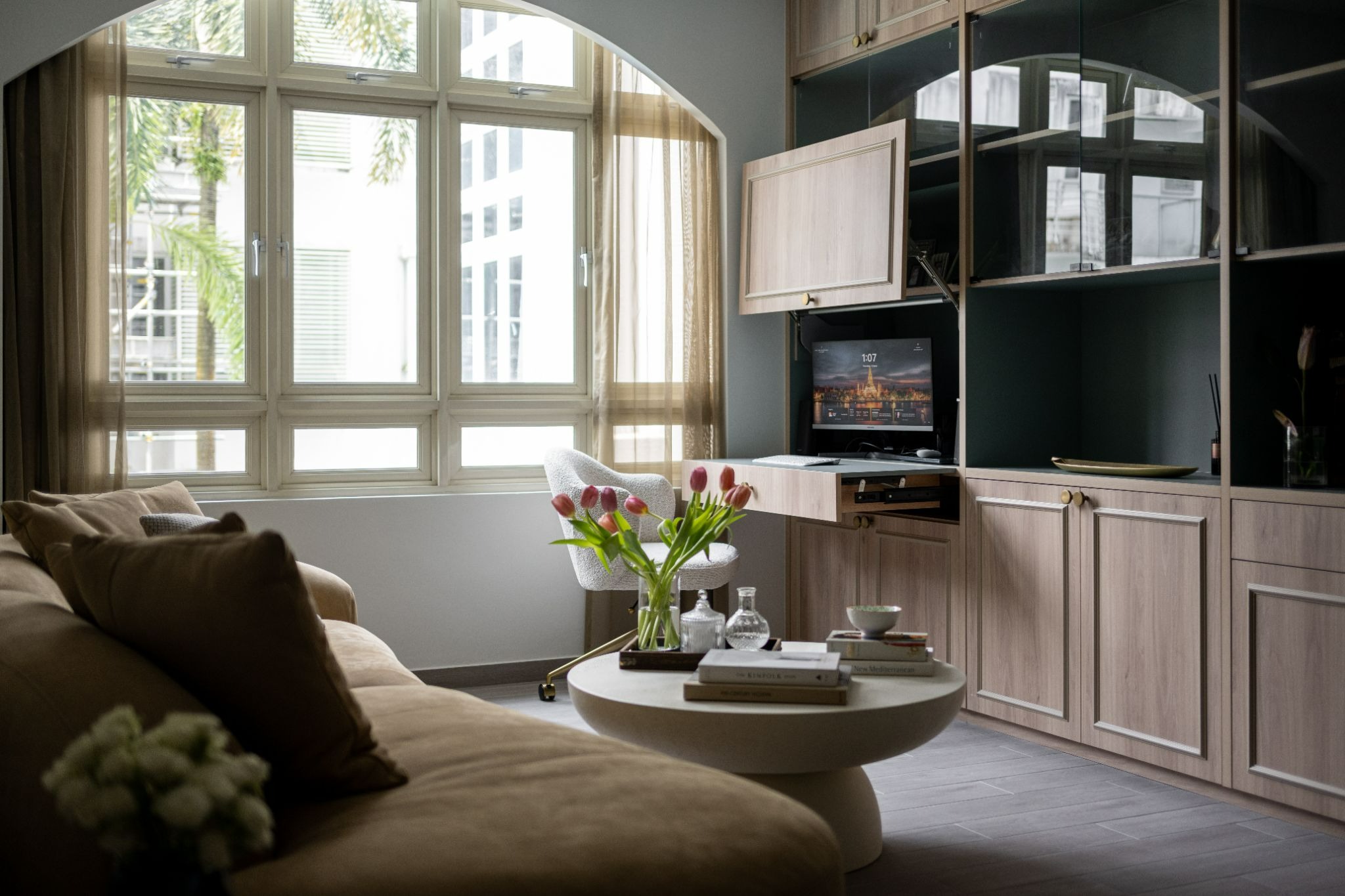
One common mistake in hybrid homes is designing entirely around productivity while forgetting recovery.
When work equipment remains permanently visible, your brain struggles to switch off fully at the end of the day. Over time, this can make the entire home feel psychologically tied to work.
Good home office design creates boundaries, even in smaller homes. This may involve concealed desks, integrated storage, sliding panels, layered lighting, or simply stronger visual separation between work and personal areas.
The goal is not only efficiency. It is creating a home that supports focus during working hours while still feeling restful afterwards.
At Loren Ng Designs, we design psychology-led interiors that balance productivity, comfort, and long-term liveability. Through thoughtful space planning, bespoke carpentry, and structured project management, we help homeowners create spaces that support the way they actually live and work today.
📩 ask@lorenngdesigns.com
📷 @loren_ng_designs
Posted by:


BACK TO BLOG
You Might Also Like
.png)
.jpeg)


