

Paws Underfoot: Designing Homes For Life With Pets
18 May 2026
Singapore
Share


Although Singapore is a small country, its pet population has been steadily growing — quietly reshaping how homes are lived in and designed. Dogs and cats have become integral companions in daily life, influencing routines, emotional wellbeing, and the way space is used from morning to night.
Beyond companionship, research into the human–animal bond has consistently shown that living with pets can reduce stress, encourage movement, and support mental wellbeing. These benefits point to a simple design truth: homes should do more than look good. They should support how people — and their animals — live and feel.
We see pet-friendly design as a question of lived experience rather than trend. When pets are part of the household, good design becomes less about styling and more about balance: between durability and comfort, order and warmth, structure and ease.
Why Pets Now Shape The Way Singapore Homes Are Designed

Pet ownership in Singapore has risen steadily over the past decade. Between 2016 and 2020, dog and cat populations grew at compound annual rates of 1.9% and 7.3% respectively, with cats showing particularly strong momentum. This shift is reflected in official figures published by Singapore’s Animal & Veterinary Service, which recorded an increase in licensed dogs from around 70,000 in 2019 to over 87,000 in 2022.
Urban density plays a role. Cats, adaptable to apartment living and requiring less physical space, have become increasingly popular. Dogs remain deeply embedded in family life, shaping daily routines and social rhythms within the home.
At Loren Ng Designs, pet-friendly design does not begin with materials or finishes. It begins with understanding how animals experience space.
From Behaviour To Spatial Intent

Dogs As Social, Environmentally Sensitive Companions
Dogs have evolved alongside humans, developing a strong sensitivity to social cues, routine, and spatial clarity. Research into canine behaviour consistently shows that dogs rely on predictability and proximity to feel secure.
Studies of canine visual attention show that dogs actively monitor human body signals and gestures, orienting their gaze toward communicative cues from people as part of how they interpret their surroundings — a behaviour that supports why dogs may position themselves along circulation routes or near thresholds where they can visually track their human companions.
Stress in dogs is frequently environmental. Sudden noises, slippery flooring, confined layouts, and lack of clear resting zones can all contribute to anxiety, particularly in urban homes. For further guidance on encouraging good behaviour in dogs, read here.
Design Implications For Dog-Friendly Homes
- Open Sightlines That Allow Visual Connection To Family Members
- Clear Circulation Routes That Reduce Confusion And Anxiety
- Calm Acoustic Environments With Minimal Echo
- Defined Resting Zones Close To Daily Activity, Not Isolated Corners

Cats As Territorial, Sensory-Driven Occupants
Cats experience domestic space through a fundamentally different lens. Behavioural research shows that cats prioritise territorial control, vertical access, and the ability to retreat without confrontation. Stress in cats is often subtle, emerging through avoidance, over-grooming, or changes in eating habits — frequently linked to environmental pressure rather than overt disturbance.
Feline behaviour also demonstrates that noise, glare, and overcrowding can elevate stress levels, particularly in compact homes where territory is compressed. Environmental optimisation — not stimulation — is key.
For a deeper understanding of feline behaviour, read here.
Design Implications For Cat-Friendly Homes
- Vertical Zones That Allow Observation And Retreat
- Multiple Circulation Paths To Avoid Territorial Conflict
- Quiet, Enclosed Resting Areas Away From Foot Traffic
- Soft, Non-Reflective Materials That Reduce Sensory Overload
Both species are sensitive to sound, clutter, and overstimulation. Calm, legible spaces — rather than overly complex layouts — help reduce stress for everyone in the household.
This approach reframes pets as primary users of space, shaping layouts and transitions from the outset rather than being accommodated later.
Designing With Sensory Experience In Mind
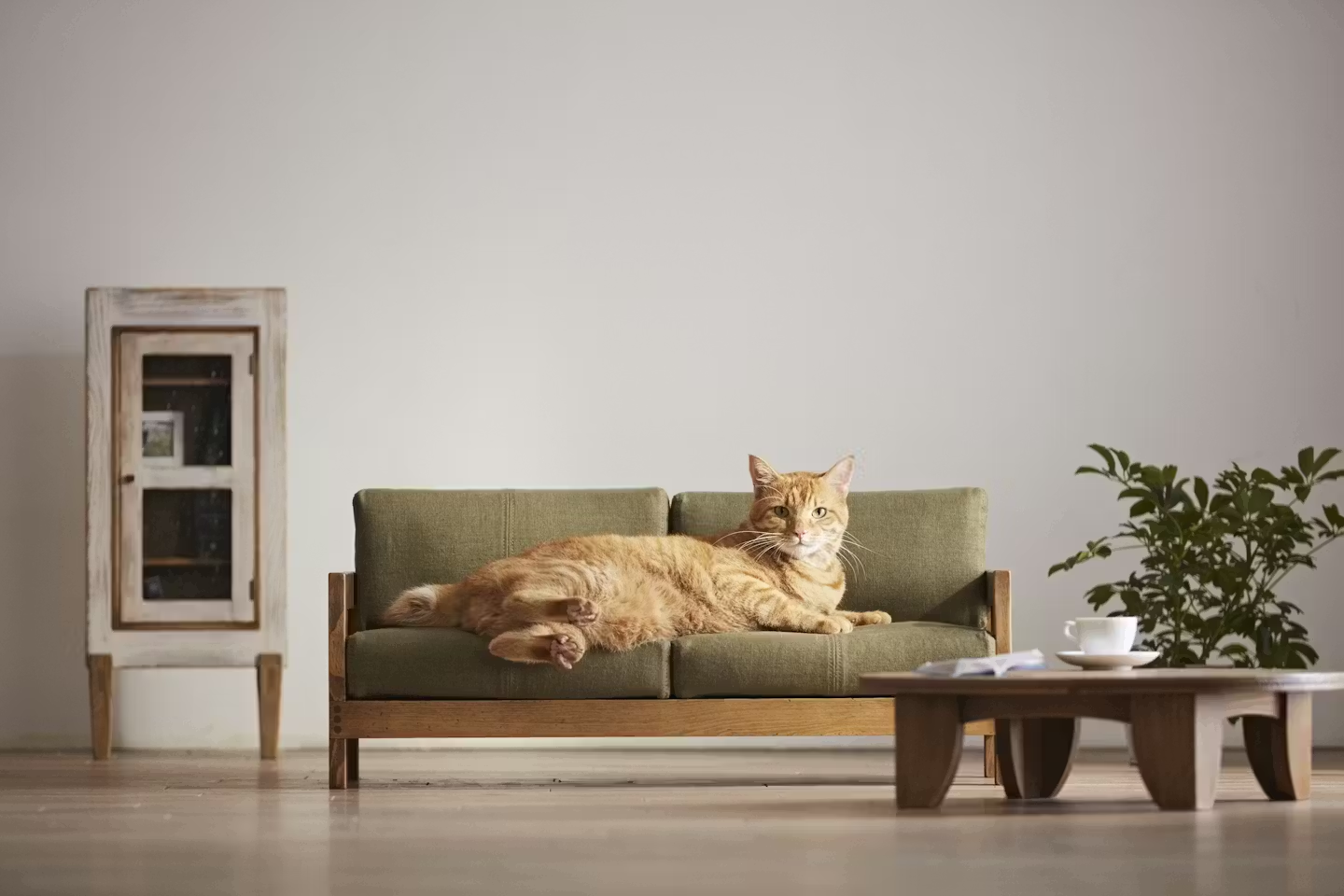
Pets don’t just behave differently from humans — they experience the home differently. Dogs and cats perceive space at a lower eye level, respond more strongly to contrast and movement, and are far more sensitive to sound and reflection than people.
Their visual systems prioritise motion and contrast over fine detail, while their hearing extends into higher frequencies, making certain noises, echoes, or even subtle vibrations more noticeable. Understanding these differences helps designers avoid spaces that look calm to humans but feel overstimulating to animals.
Key Sensory Considerations in Pet-Friendly Interiors
- Lower Eye-Level Perspectives, Where Reflections, Glare, And Movement Are More Pronounced
- Contrast Sensitivity, Which Can Make Sharp Patterns Or Strong Light Transitions Stressful
- Sensitivity To Sound, Including Echo, High-Frequency Noise, And Hard Surfaces
- Cleaning Routines, Where Strong Chemical Smells Or Slippery Floors Can Disrupt Comfort And Orientation
Designing with these sensory factors in mind — alongside behavioural understanding — leads to interiors that feel quieter, more legible, and more emotionally supportive for both pets and people.
To explore this topic in greater depth, read here.
Designing For Life In Singapore
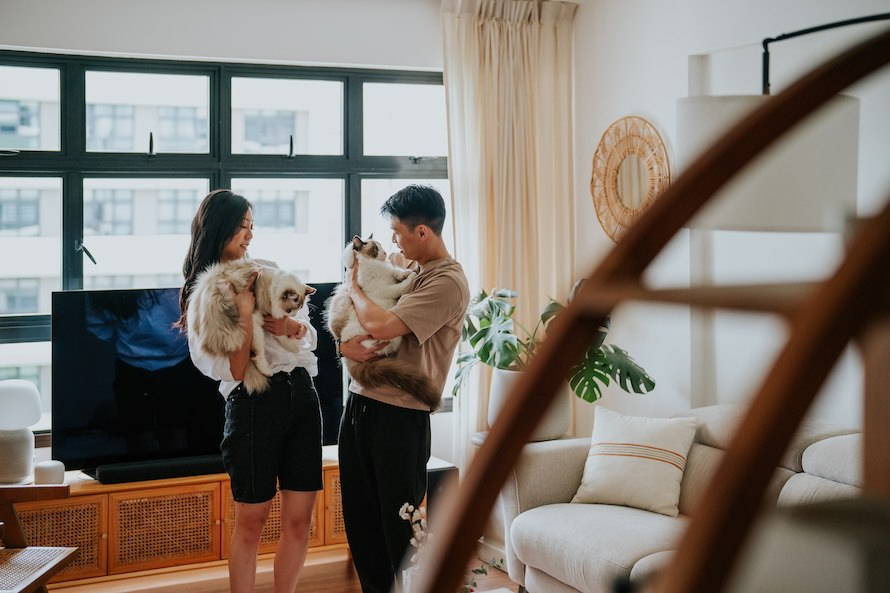
Singapore homes demand efficiency, resilience, and careful detailing. Compact layouts, high-rise living, and tropical humidity require design solutions that work quietly in the background, supporting daily routines without drawing attention to themselves.
Pet-friendly interiors here should be:
- Adaptable to Daily Routines
- Easy to Maintain
- Visually Calm
- Climate-Appropriate
When these considerations are addressed holistically, constraints become opportunities for smarter, more thoughtful design.
Curious about which materials work best in a pet-friendly home? Read part two — Pet-Friendly Interiors: Materials, Storage, and Everyday Function.
Thoughtful Design, Down To The Last Pawprint
At Loren Ng Designs, we believe the best interiors are not only visually resolved, but emotionally attuned.
Good design supports life as it unfolds — paws underfoot and all.
📩 ask@lorenngdesigns.com
📷 @loren_ng_designs
Posted by:


BACK TO BLOG
You Might Also Like
.png)