





What Materials Work Best in a Singapore Shophouse Renovation?
14 September 2026
Singapore
Share

How to pair old and new materials in a Singapore shophouse without turning the home into a period set.

Most shophouse renovations cross the line between heritage-inspired and themed without anyone noticing it happened. A reproduction tile matches the original a little too perfectly. Rattan fills an entire room. Terrazzo runs from wall to wall. Each decision looks reasonable on its own, but together the home can start to feel like a version of a shophouse rather than the real thing.
So how do you choose materials that respect the building without making it feel old-fashioned?
Start with what genuinely belongs to the house, then use new materials to support it rather than imitate it. The goal is not to make every surface look historic. It is to understand which existing materials are worth retaining, how they behave, and what can sit beside them without competing for attention.
That balance is something we explored in Shophouse Styling: From Historic Charm to Contemporary Comfort. Material selection is where that idea becomes very real, tile by tile and surface by surface.
Most owners do not want to become material experts. They simply want to know what works, what does not, and why before a tiler, carpenter or builder makes the decision permanent.
What should you pair with original shophouse tiles?
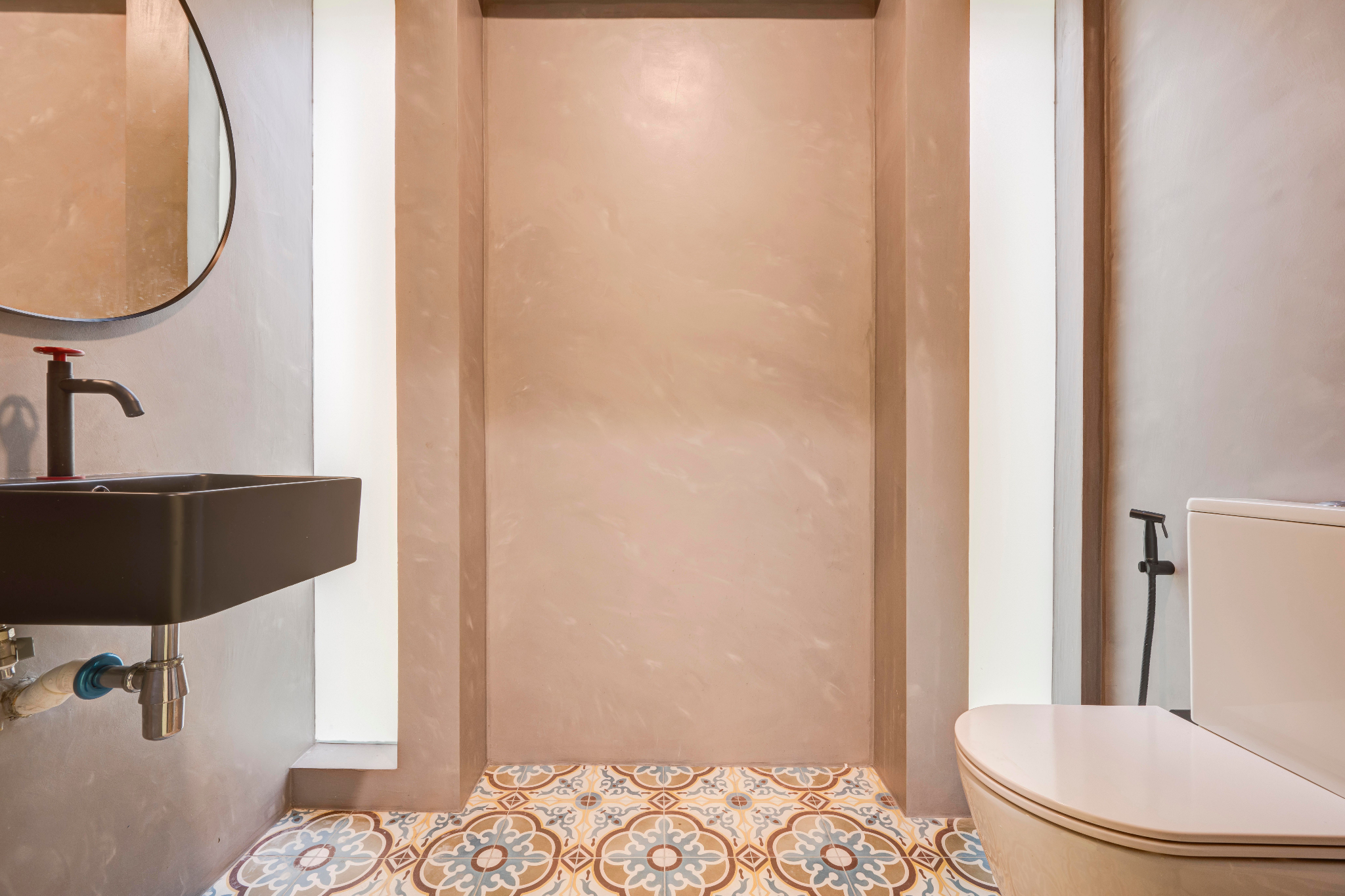
If original tiles can be retained, we usually prefer pairing them with a quieter new finish rather than trying to reproduce every aged detail. Limewash can work particularly well because it adds texture without competing with the existing floor.
New reproduction tiles may match the pattern, but they can still look sharper and more even than tiles that have aged for decades. Instead of trying to make the new disappear, a restrained adjoining finish lets the original surface remain the feature.
Limewash can also be suitable for traditional porous masonry because it is highly vapour-permeable, allowing moisture to move through the wall rather than trapping it behind a less breathable finish.
URA's conservation guidance discusses appropriate paints and coatings for historic buildings, and we look further at these finishes in Tactile Surfaces Explored: Limewash vs Stucco Veneziano.
The pairing should respect how the existing building works.
Use rattan as an accent, not across the whole room
Rattan usually works best as one layer of a shophouse interior. Pairing it with stone, metal or cleaner contemporary finishes keeps the tropical character without making the room feel staged.
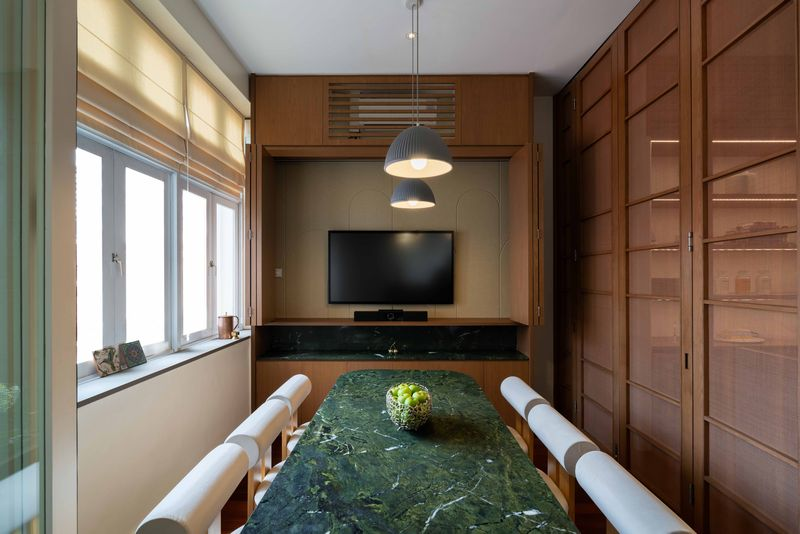
An entire room of rattan can quickly feel like a set. A rattan cabinet front beside brushed metal hardware, or woven detailing against marble, creates more contrast and allows the natural material to feel intentional.
Singapore's humidity matters too. Natural rattan responds to moisture, so its treatment, construction and placement should be considered if it is expected to perform well over time.
In one of our shophouse projects, we used rattan as part of the partition door rather than throughout the room. It still brings warmth and texture, while the green marble beside it keeps the overall interior feeling more contemporary.
Is terrazzo a good material for a shophouse?
It can be, but the right terrazzo depends on where it is used, the substrate, moisture conditions and sunlight exposure. Visually, large areas of hard flooring also benefit from warmer materials around them.
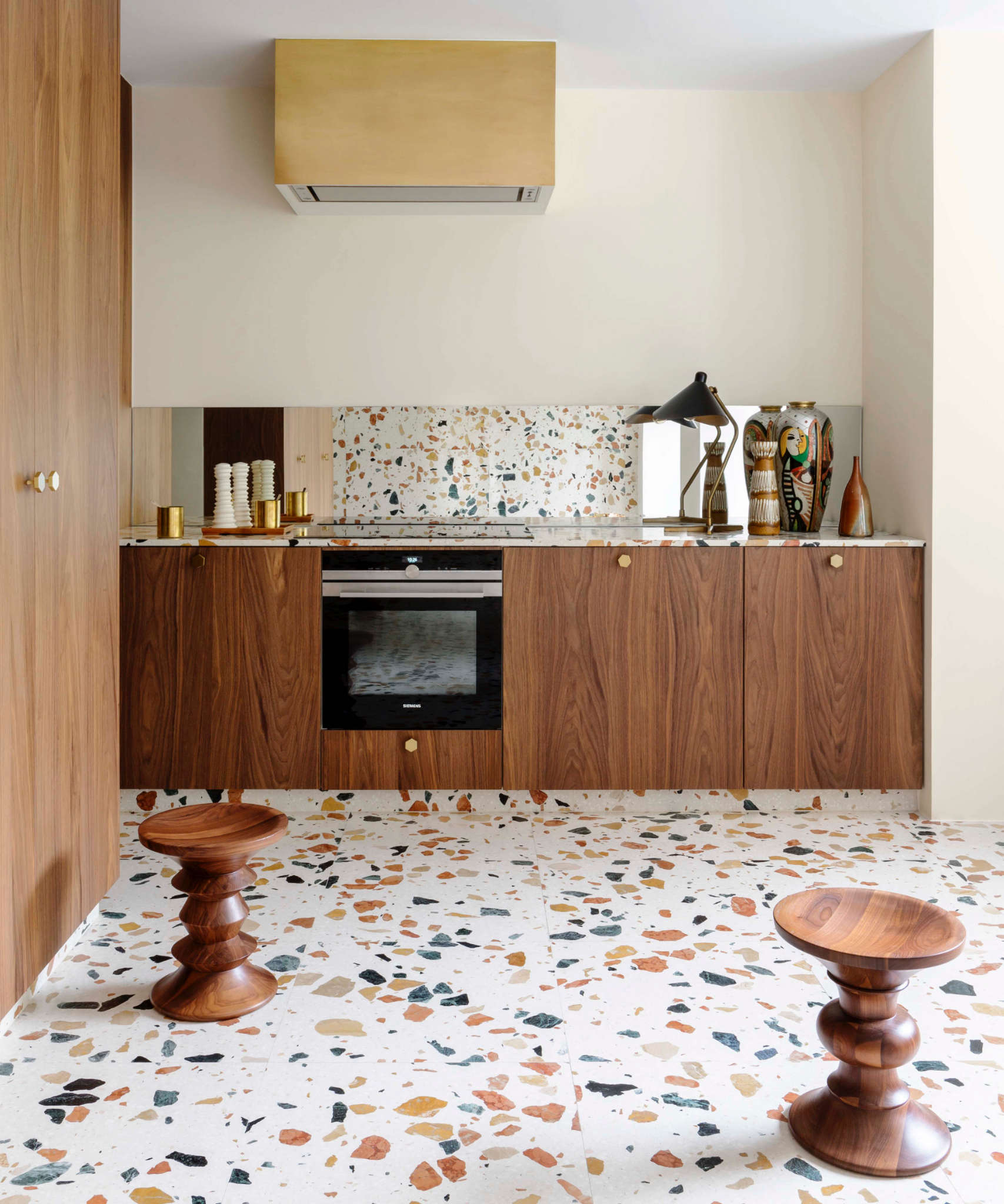
Terrazzo works well when you want something solid and architectural without becoming overly decorative. But running the same hard finish through an entire shophouse can leave the interior feeling colder than intended, particularly where high ceilings and other hard surfaces are already present.
Warm timber can soften that through stair treads, joinery, doors or selected floor transitions.
The terrazzo system also needs to suit its location. Indoor and outdoor use, sunlight, the existing slab and moisture all affect what should be specified. Those decisions are best made before materials are ordered, not after problems appear on site.
How do you mix old and new materials without copying the past?
This is where many shophouse interiors become unnecessarily complicated.
If the house already has original tiles, timber elements, masonry or architectural details worth keeping, those features can tell the heritage story. The new interventions can then be quieter and more contemporary.
That might mean an original patterned floor against a softly textured wall. Old timber beside clean-lined new carpentry. A historic detail beside simple metalwork rather than another reproduction detail competing with it.
You should be able to understand the clarity, what belongs to the building, what has been added for the way the owner lives today, and why the two work together.
How can you tell when a shophouse interior has become too themed?
A useful test is to ask three questions.
What is original?
Where possible and appropriate, allow the existing architectural material to do some of the visual work.
What is new?
New work can be contemporary. It does not always need to be artificially aged or designed to look historic.
Why is this material here?
It should have a reason connected to the building, how the owner lives, the climate, maintenance or performance. “Because it checks the box of looking like a piece of ‘heritage’” is usually not enough on its own.
A reproduction tile pattern, an all-rattan room or decorative heritage motifs can all look attractive individually. The question is whether they actually respond to anything specific about the house.
That distinction is what keeps a material scheme from becoming thematic.
Good materials should still make sense after the photograph

A shophouse is not a stage set. Materials have to deal with daily use, moisture, sunlight, maintenance, movement and the realities of an older building.
A finish that looks convincing on a mood board but performs poorly in its actual location is not a good specification. Neither is a material chosen only because it fits a visual idea of “heritage”.
The better approach is to choose materials that feel connected to the building and still make sense years after the project has been photographed.
We explore that bigger question further in Preserving Historical Shophouses in Singapore.
Planning a shophouse renovation in Singapore?
Choosing materials is only one part of getting an older building right. Layout, structure, existing conditions, authority requirements, building services and the way the home will be used all affect what should be specified.
At Loren Ng Designs, we handle the design, construction and bespoke carpentry as one accountable team, so these decisions can be considered together rather than in isolation.
Explore our Shophouse Design & Build service →
If you are already planning a major shophouse renovation and want to understand what should be resolved before construction begins, book a consultation with us →
📩 ask@lorenngdesigns.com
📷 @loren_ng_designs
Posted by:


BACK TO BLOG
You Might Also Like
.png)
.jpeg)


